World Bank Approves $150 Million for Sindh Property-Tax Reform
Sindh has financing to collect more property tax, but can better collection translate into better municipal services?
On October 30, the World Bank’s Board approved $150 million for a program to improve property-tax collection and municipal services in Sindh, Pakistan.
The World Bank approved $150 million for the Sindh Property Revenues Enhancement Program, which will improve urban property-tax administration and municipal service capacity. [9] The program aims to raise Karachi’s annual property-tax collection from approximately $8.5 million to $85 million and co…
Open original · [9] Pakistan: New World Bank Program to Strengthen Municipal Revenues and Services in Sindh — World Bank News
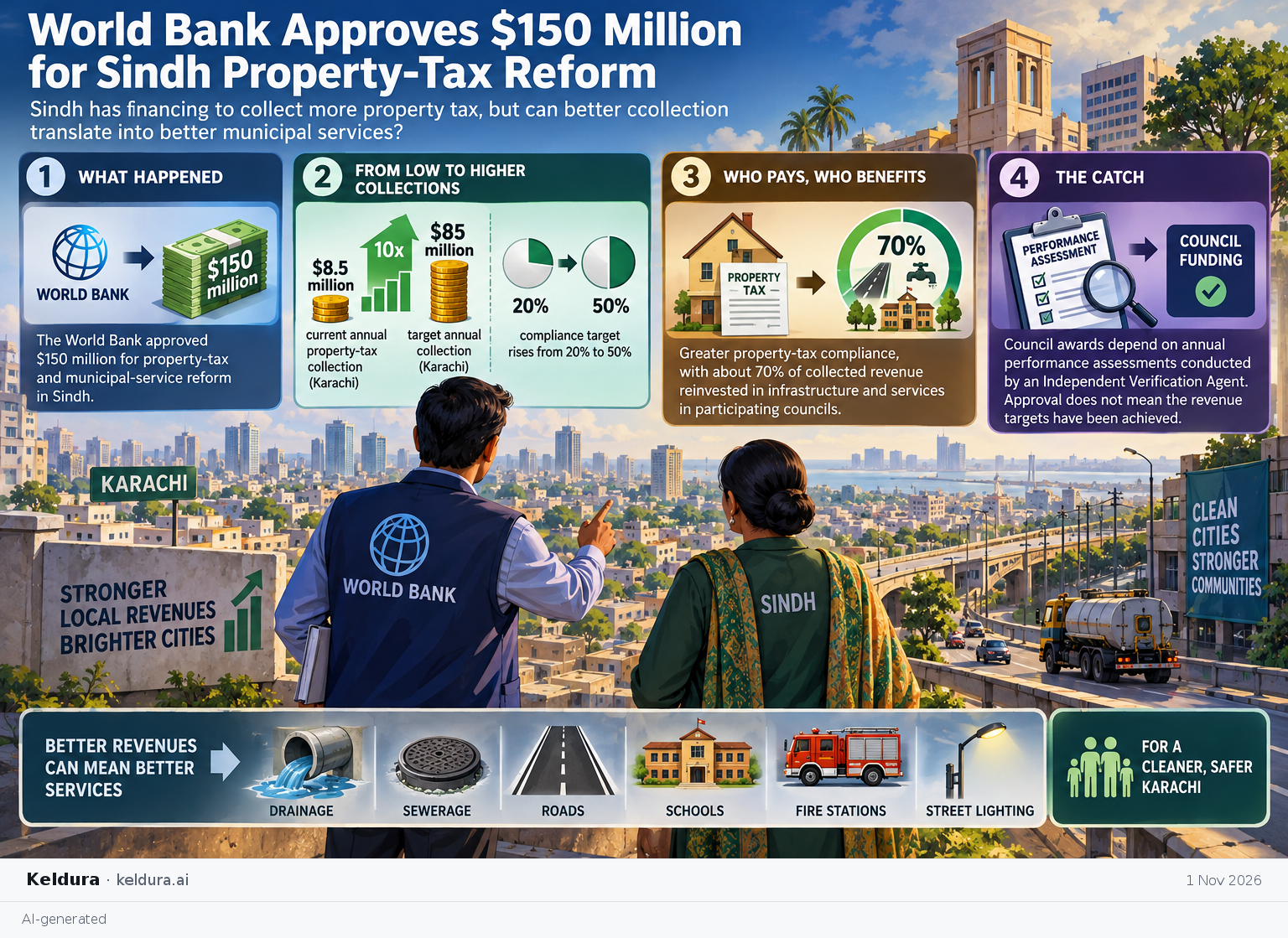
The World Bank approved $150 million for the Sindh Property Revenues Enhancement Program, which will improve urban property-tax administration and municipal service capacity. [9] The program aims to raise Karachi’s annual property-tax collection from approximately $8.5 million to $85 million and compliance from 20% to 50%, with about 70% of collected revenues reinvested in participating councils’ infrastructure and services. [9]
Why it matters: The program connects local revenue collection to services for 3.58 million people in Karachi’s 25 participating councils, including drainage, sewerage, roads, schools, fire stations, and street lighting. [9] Its design makes council funding conditional on independently verified performance rather than distributing all awards unconditionally. [9]
Key insights: Karachi’s current annual property-tax collection is approximately $8.5 million; the World Bank says similarly sized cities collect 82 to 350 times more. [9] | The proposed collection target is ten times the current amount, while the compliance target rises from 20% to 50%. [9] | New systems will cover billing, payments, grievance handling, and council financial management, addressing administration as well as compliance. [9] | A $40 million component will extend property surveys and tax administration to 20 councils in other Sindh urban centers, indirectly benefiting approximately 4.5 million people. [9]
Cheatsheet facts: What happened: The World Bank approved $150 million for property-tax and municipal-service reform in Sindh. [9] | Why: Karachi collects approximately $8.5 million in property tax annually; the program targets $85 million and an increase in compliance from 20% to 50%. [9] | Who pays: The program seeks greater property-tax compliance, with about 70% of collected revenue reinvested in infrastructure and services in participating councils. [9] | The catch: Council awards depend on annual performance assessments conducted by an Independent Verification Agent; approval does not mean the revenue targets have been achieved. [9]
X copy pack
Edition complete
You've reached the end of this edition.