WHO Links Youth Nicotine Prevention to Mental Well-Being
WHO selected “Mental well-being – protecting young minds from tobacco and nicotine” as the theme for World No Tobacco Day 2027.[5] The campaign will challenge claims that nicotine helps young people manage stress or anxiety while promoting prevention, cessation services and stronger protective poli…
WHO selected “Mental well-being – protecting young minds from tobacco and nicotine” as the theme for World No Tobacco Day 2027.[5] The campaign will challenge claims that nicotine helps young people manage stress or anxiety while promoting prevention, cessation services and stronger protective policies.[5]
Why it matters: Nicotine may offer temporary relief but can cause addiction, with withdrawal producing irritability, anxiety and cravings; adolescent exposure can also affect the developing brain and is associated with negative mental-health outcomes.[5]
Key insights: WHO says tobacco companies are expanding into businesses described as wellness, health care and “beyond nicotine.”[5] | The campaign is intended to give young people evidence-based information and improve access to cessation and related health services.[5] | Quitting tobacco is associated with reduced stress, anxiety and depressive symptoms, as well as better sleep and quality of life.[5]
Cheatsheet facts: What changed: World No Tobacco Day 2027 will explicitly place tobacco and nicotine control within youth mental-well-being efforts.[5] | Why now: WHO says nicotine products are being positioned as coping tools while young people face academic, social and future-related pressures.[5] | Watch next: Watch for governments and health organizations to introduce campaign-linked prevention, cessation and youth-protection measures ahead of 31 May 2027.[5]
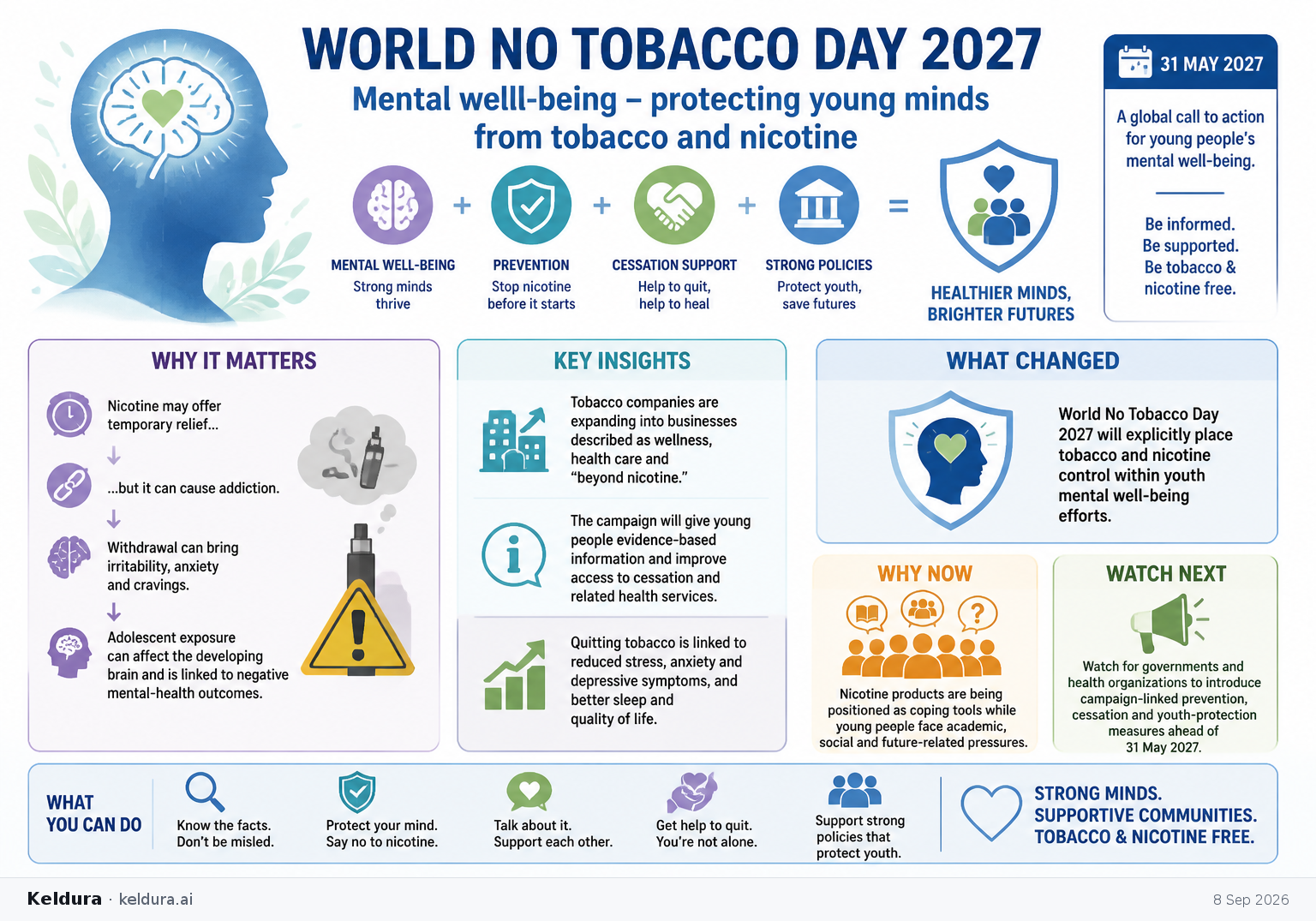
WHO selected “Mental well-being – protecting young minds from tobacco and nicotine” as the theme for World No Tobacco Day 2027.[5] The campaign will challenge claims that nicotine helps young people manage stress or anxiety while promoting prevention, cessation services and stronger protective policies.[5]
Why it matters: Nicotine may offer temporary relief but can cause addiction, with withdrawal producing irritability, anxiety and cravings; adolescent exposure can also affect the developing brain and is associated with negative mental-health outcomes.[5]
Key insights: WHO says tobacco companies are expanding into businesses described as wellness, health care and “beyond nicotine.”[5] | The campaign is intended to give young people evidence-based information and improve access to cessation and related health services.[5] | Quitting tobacco is associated with reduced stress, anxiety and depressive symptoms, as well as better sleep and quality of life.[5]
Cheatsheet facts: What changed: World No Tobacco Day 2027 will explicitly place tobacco and nicotine control within youth mental-well-being efforts.[5] | Why now: WHO says nicotine products are being positioned as coping tools while young people face academic, social and future-related pressures.[5] | Watch next: Watch for governments and health organizations to introduce campaign-linked prevention, cessation and youth-protection measures ahead of 31 May 2027.[5]