NASA runs Artemis engine test for full launch duration
NASA fired an RS-25 for a launch-length test, but what does that establish about hardware destined for Artemis flights?
On October 21, 2026, NASA fired developmental RS-25 engine No. 10001 for 500 seconds at Stennis Space Center in Mississippi.
NASA ran developmental RS-25 engine No. 10001 for 500 seconds, matching the firing duration during an SLS launch, and reached the 111% power level required of new production engines. The test targeted acceptance testing of future Artemis flight components and validation of a new nozzle thermal-prot…
Open original · [7] NASA Conducts RS-25 Engine Test in Support of Future Artemis Missions - NASA — NASA News
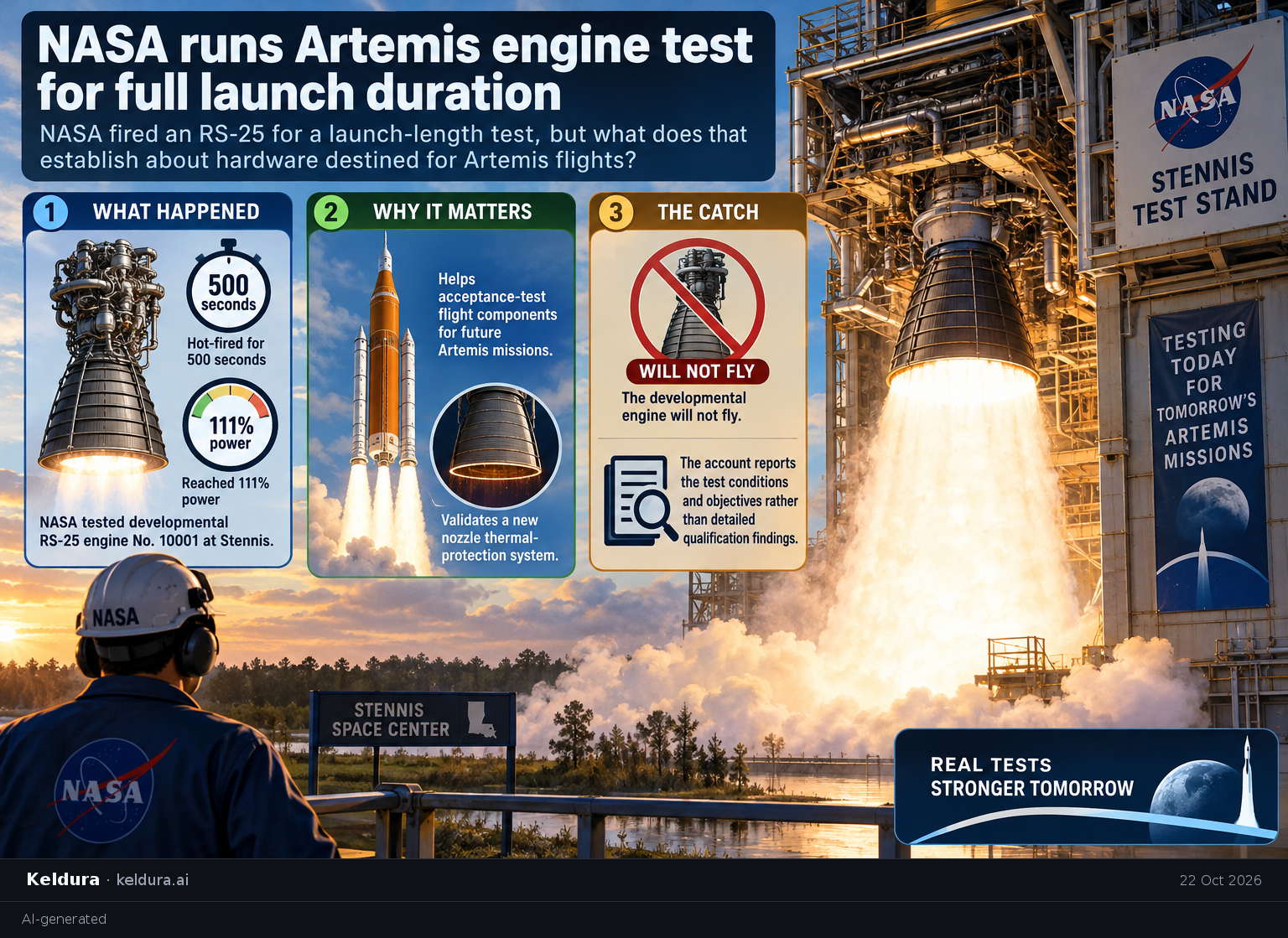
NASA ran developmental RS-25 engine No. 10001 for 500 seconds, matching the firing duration during an SLS launch, and reached the 111% power level required of new production engines. The test targeted acceptance testing of future Artemis flight components and validation of a new nozzle thermal-protection system, although the developmental engine itself will not fly. [7]
Why it matters: The test exposes hardware to launch-relevant operating conditions before flight. Four RS-25 engines provide up to 2 million pounds of combined thrust on each SLS launch, making component acceptance and thermal protection directly relevant to the rocket's propulsion system. [7]
Key insights: Duration and power tested different requirements: 500 seconds matched launch firing time, while 111% matched the thrust level needed from new production engines. [7] | The new thermal-protection system is intended to shield the engine nozzle from the thermal environment around SLS during launch. [7] | NASA describes the run's objectives and operating conditions, but the supplied account does not provide detailed component acceptance results or thermal-performance measurements. [7]
Cheatsheet facts: What happened: NASA hot-fired developmental RS-25 engine No. 10001 for 500 seconds and reached 111% power at Stennis. [7] | Why: The objectives were to acceptance-test flight components for future Artemis missions and validate new nozzle thermal protection. [7] | The catch: The developmental engine will not fly; the account reports the test conditions and objectives rather than detailed qualification findings. [7]
X copy pack
Edition complete
You've reached the end of this edition.