London Seeks More Closely Matched Blood for Sickle Cell Patients
NHS England is urging London’s Black African and Black Caribbean communities to donate blood during Sickle Cell Awareness Month, citing approximately 10,000 sickle cell patients in the capital.[3] Only 3% of donors nationally come from Black communities, although people of Black African and Black C…
NHS England is urging London’s Black African and Black Caribbean communities to donate blood during Sickle Cell Awareness Month, citing approximately 10,000 sickle cell patients in the capital.[3] Only 3% of donors nationally come from Black communities, although people of Black African and Black Caribbean heritage are up to ten times more likely to carry the Ro blood type needed by many sickle cell patients.[3]
Why it matters: Sickle cell disorder can cause severe pain, organ damage and life-threatening complications, while transfusion outcomes depend on safe, closely matched blood that Black heritage donors are more likely to provide.[3]
Key insights: Sickle cell disorder affects approximately 19,000 people across the UK, with around 10,000 patients based in London.[3] | The condition makes red blood cells hard and sickle-shaped, potentially blocking blood flow.[3] | People aged 17 and older who are generally fit and healthy may be eligible to donate blood.[3]
Cheatsheet facts: What changed: NHS England launched a September appeal centred on Black African and Black Caribbean blood donors in London.[3] | Why now: London has around 10,000 sickle cell patients, while Black communities account for only 3% of blood donors nationally.[3] | Watch next: Track whether donor participation from Black communities rises during Sickle Cell Awareness Month and increases access to Ro-type blood.[3]
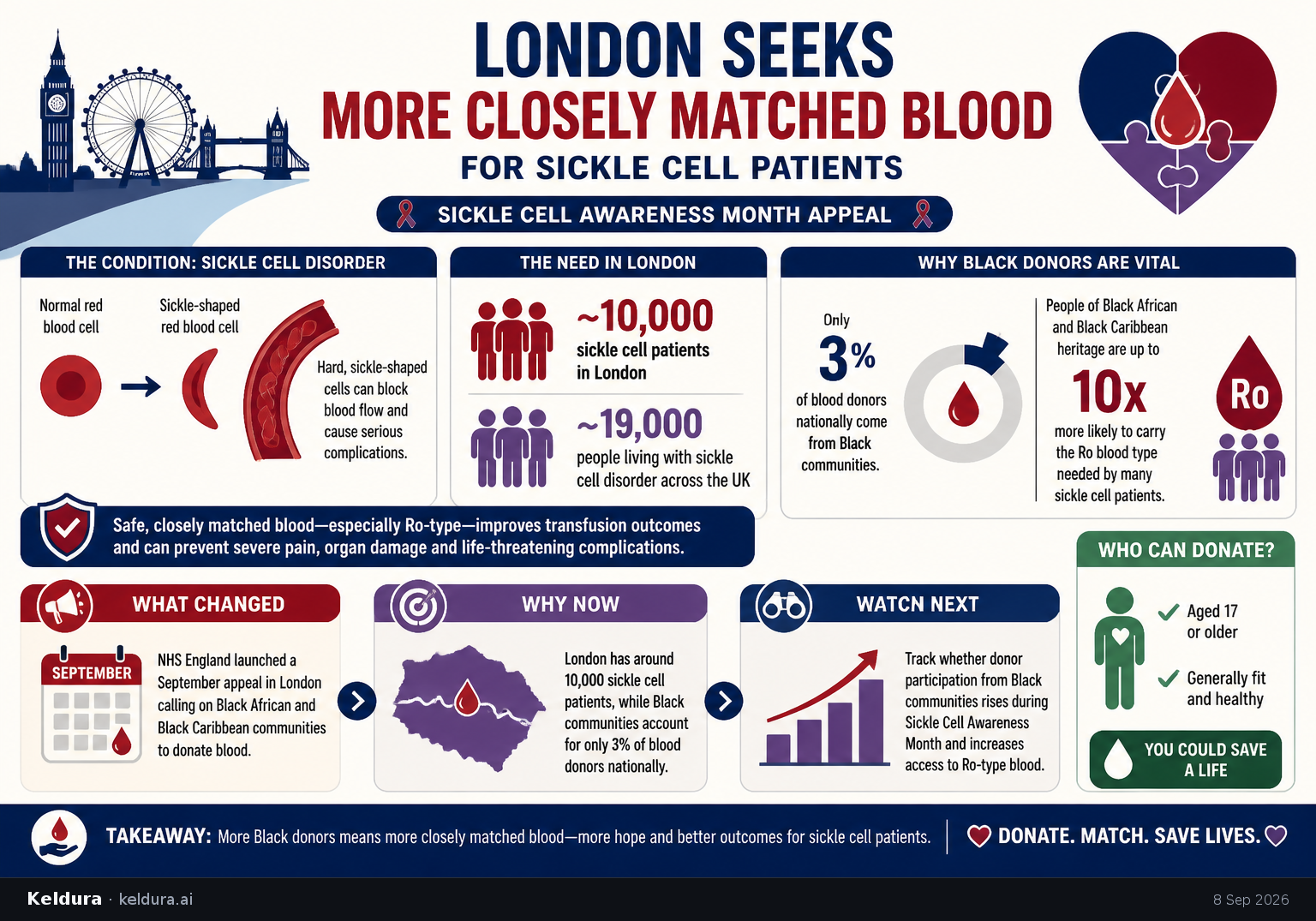
NHS England is urging London’s Black African and Black Caribbean communities to donate blood during Sickle Cell Awareness Month, citing approximately 10,000 sickle cell patients in the capital.[3] Only 3% of donors nationally come from Black communities, although people of Black African and Black Caribbean heritage are up to ten times more likely to carry the Ro blood type needed by many sickle cell patients.[3]
Why it matters: Sickle cell disorder can cause severe pain, organ damage and life-threatening complications, while transfusion outcomes depend on safe, closely matched blood that Black heritage donors are more likely to provide.[3]
Key insights: Sickle cell disorder affects approximately 19,000 people across the UK, with around 10,000 patients based in London.[3] | The condition makes red blood cells hard and sickle-shaped, potentially blocking blood flow.[3] | People aged 17 and older who are generally fit and healthy may be eligible to donate blood.[3]
Cheatsheet facts: What changed: NHS England launched a September appeal centred on Black African and Black Caribbean blood donors in London.[3] | Why now: London has around 10,000 sickle cell patients, while Black communities account for only 3% of blood donors nationally.[3] | Watch next: Track whether donor participation from Black communities rises during Sickle Cell Awareness Month and increases access to Ro-type blood.[3]