NASA changes lunar landing plans to target a 2028 return
NASA is giving two landers different routes to the Moon, but which will be ready to carry astronauts in 2028?
On October 23, 2026, NASA outlined revised lander operations and a 2027 Earth-orbit test mission aimed at returning astronauts to the Moon in 2028.
NASA and its contractors have streamlined lunar lander designs and changed mission operations, replacing a shared lunar rendezvous orbit with partner-specific orbits to support a 2028 landing. [5] Artemis III is now planned to take four astronauts into low Earth orbit in 2027 to test docking with b…
Open original (4 sources):
- [5] NASA, Partners Accelerate Lander Development for 2028 Moon Missions - NASA — NASA News
- [8] NASA says Artemis program adjustments improve shot at 2028 moon landing - CBS News — cbsnews.com
- [9] NASA Shares Artemis Acceleration Plans for Moon Missions - NASA — NASA News
- [7] NASA adopting Apollo’s urgency to build a moon base and land astronauts within two years — apnews.com
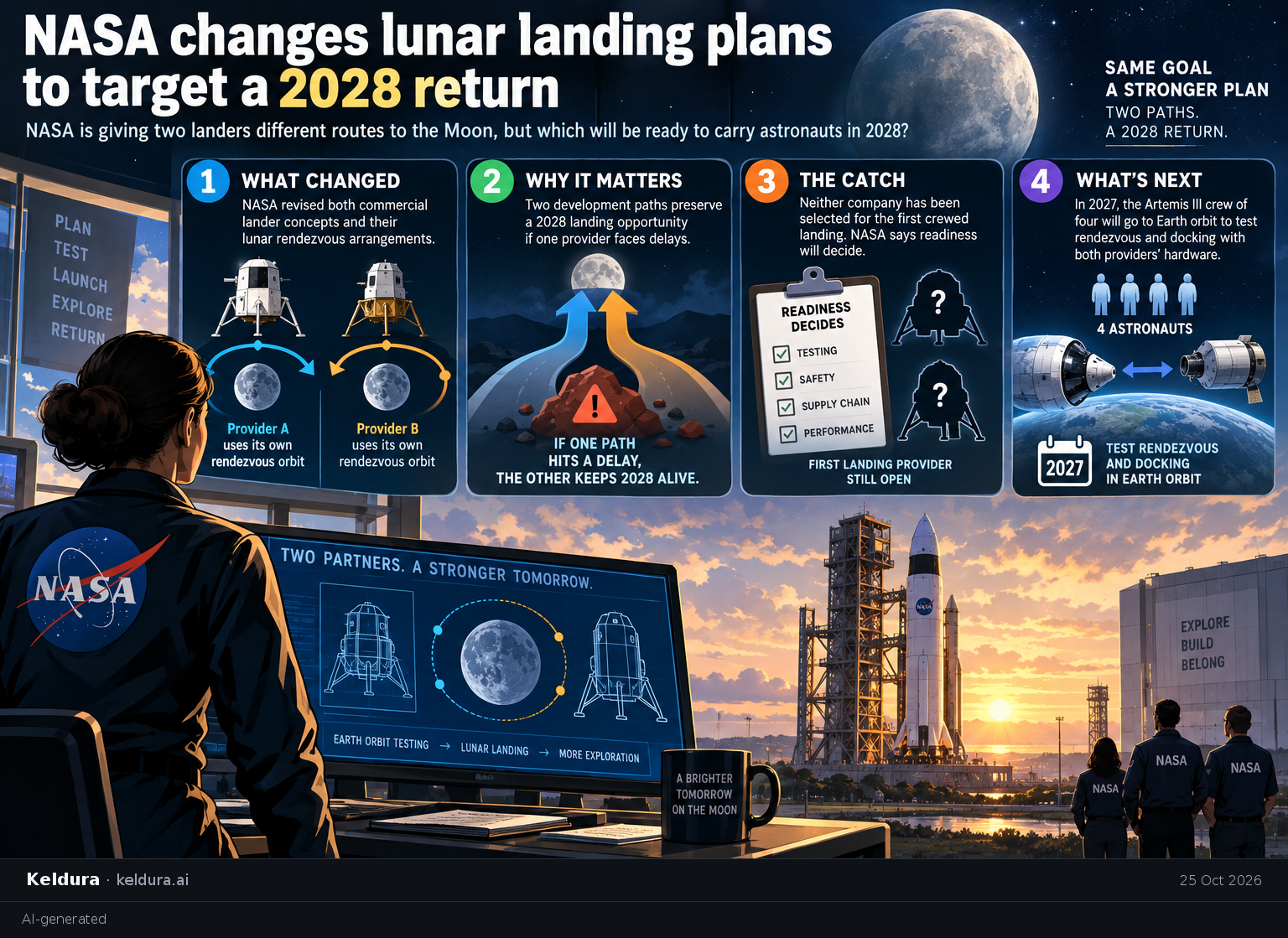
NASA and its contractors have streamlined lunar lander designs and changed mission operations, replacing a shared lunar rendezvous orbit with partner-specific orbits to support a 2028 landing. [5] Artemis III is now planned to take four astronauts into low Earth orbit in 2027 to test docking with both providers’ hardware; NASA will select the first lunar landing provider based on readiness. [5][8][9] AP also reported the agency’s accelerated push toward a lunar return and Moon base. [7]
Why it matters: NASA is building an alternative path to the lunar surface if either SpaceX or Blue Origin encounters technical or supply-chain delays, rather than making the first landing depend on one provider’s schedule. [8] The decision also makes readiness testing central to which company gets the first crewed landing. [5]
Key insights: Artemis III’s immediate destination is Earth orbit, where crews can test critical rendezvous and docking procedures before lunar landing missions. [8][9] | The landers and Orion will no longer meet in a near-rectilinear halo orbit; each provider’s rendezvous orbit will reflect its own system. [5] | For initial lunar missions, two astronauts will descend while two remain aboard Orion, with NASA targeting two approximately two-hour moonwalks. [5] | The first landing assignment remains open: NASA says lander readiness will determine the provider, with a second crewed landing opportunity to follow. [5]
Cheatsheet facts: What happened: NASA revised both commercial lander concepts of operations and their lunar rendezvous arrangements. [5] | Why: Two development paths are intended to preserve a 2028 landing opportunity if one provider encounters significant delays. [8] | The catch: Neither company has been selected for the first crewed landing; NASA says readiness will decide. [5] | What's next: Watch the planned 2027 Artemis III mission: four astronauts are to test rendezvous and docking in Earth orbit. [8][9]
X copy pack
Edition complete
You've reached the end of this edition.